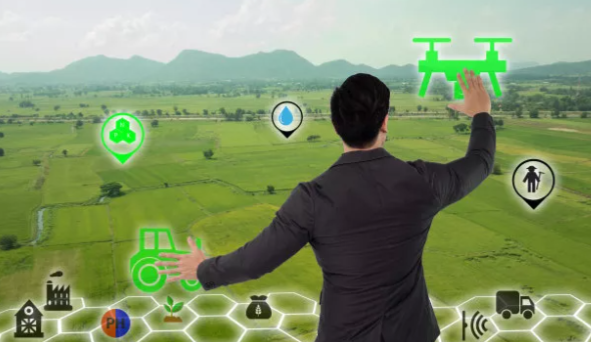
With the popularization of IoT technology, various IoT application cases can be seen everywhere in our lives unconsciously. Such as shared bicycles neatly parked on the roadside, shared mopeds, smart sockets and smart appliances in the home; smart irrigation systems in agriculture; smart parking systems in cities are all classic cases of IoT applications. It is foreseeable that the emergence and implementation of a large number of high-quality IoT solutions in the near future will bring a better experience and more convenience to our lives. Модуль Bluetooth
First of all, we need to clarify what is a “smart farm”: it is a kind of Internet of Things as the core foundation, through the materialization of various functional parts in the farm, combined with wireless technology, automatic control technology and database to achieve intelligent management farm.
The development of smart farms is mainly divided into three stages:
Step 1: Traditional labor or manpower liberation, no need to enter the farm, only manpower is required for remote control on the console;
Step 2: The farm is controlled by the host computer system, and the manager can directly control the host computer to complete all farm operations, and the host computer issues all control instructions;
Step 3: Artificial intelligence is highly intelligent, and all operations do not need personnel to make decisions, and are all scheduled by unmanned systems.
In general, the cloud platform can be regarded as the brain of the smart farm, which is used for information collection, information storage, information processing, event triggering, task and instruction scheduling, etc. We take it as the manager’s role in the smart farm project, and complete the implementation of the smart farm project through the following steps:
1. Device access
Where environmental data collection is required, complete the installation and access of relay equipment. The relay device is used to connect the sensor and the intelligent management system to realize the transmission of data and control instructions. (For the relay device access process, please refer to the device access and configuration tutorial)
2. Collect data and report
Install the required sensors (such as temperature, humidity, and air quality detection) at the designated location, and connect them to the relay device. The relay device starts data collection and reporting according to the configuration parameters in the smart management system.
3. Process scheduling (data processing in the workflow engine)
After the data IO service of the smart management system receives the data, it will be delivered to the data processing process for processing. Such as: data operation, data storage, event triggering, etc.
a) Alarm (send alarm notification)
When the data of the data point meets the user’s preset value of the alarm trigger for the data point, the trigger node in the process will trigger the alarm event, and call the processing rules for the event to complete the subsequent actions, and send an alarm notification to the designated contact people and so on. последовательный модуль
b) Linkage (send commands to the device)
When the data of the data point meets the user’s preset value of the linkage trigger for the data point, the trigger node in the process will trigger the linkage event, and call the processing rule for the event to complete the subsequent behavior, and issue the linkage instruction to the specified equipment, etc. In this scheme, the linkage function is mainly used to issue the start, stop and adjustment commands of the fresh air system to the control system of the fresh air system, so as to realize the linkage reaction after the environmental state changes.