The proliferation and popularity of IoT devices have led to the rise of low-power, wide-area networks (LP-WAN) options such as SigFox, LoRa, and Weightless.
Traditional cellular options such as 4G and LTE networks consume too much power. Furthermore, they are not suitable for applications that rarely transmit small amounts of data, such as meters used to read water levels, gas consumption, or electricity consumption. Тестовые наборы
Cellular IoT attempts to respond to the constant search for better low-power, long-range applications.
Cat-1
Cat-1 represents an early push to connect IoT devices using existing LTE networks. While not as performant as 3G networks, it’s an excellent choice for IoT applications that require a browser interface or voice. The main appeal is that it’s standardized, and more importantly, it’s easy to transition to Cat-1 networks. Experts predict that Cat-1 (and Cat-M1) networks will replace it as 3G technology and eventually 4G technology becomes obsolete.
Cat-0
For LTE-based IoT networks to be successful, they need to have the following characteristics:
1) Long battery life;
2) Low cost;
3) Support a large number of devices;
4) Enhanced coverage (e.g. better signal penetration through walls)
5) Long range/broad spectrum.
Cat-0 optimizes cost by eliminating features (dual receiver chains, duplex filters) that support the high data rate requirements of Cat-1. While Cat-1 replaced 3G, Cat-0 was the protocol that laid the groundwork for Cat-M to replace 2G as a cheaper option.
Cat-M1 / Cat-M / LTE-M
Cat-M (formally known as LTE Cat-M1) is often seen as the second generation of LTE chips built for IoT applications. It completes the cost and power reductions that Cat-0 originally laid the foundation for. By limiting the maximum system bandwidth to 1.4 MHz (instead of Cat-0’s 20 MHz), Cat-M has specific use cases in LPWAN applications, such as smart metering, where only a small amount of data transfer is required.
But the real advantage of Cat-M over other options is that Cat-M is compatible with existing LTE networks. That’s good news for carriers like Verizon and AT&T because they don’t have to spend money to build new antennas, although software patches are required to get Cat-M into LTE networks. Verizon and AT&T’s existing customer base will likely conclude that Cat-M is by far the best option. Finally, 5G and LTE technologies will almost certainly coexist in the 2020s, so Cat-M’s backward compatibility is a big plus.
NB-IoT /Cat-M2
The goals of NB-IoT (also known as Cat-M2) are similar to Cat-M. However, it uses DSSS modulation instead of LTE radio. Therefore, NB-IoT cannot operate in the LTE frequency band, which means that providers need to spend higher upfront costs to deploy NB-IoT.
Still, NB-IoT has been touted as a potentially cheaper option because it eliminates the need for a gateway. Other infrastructures often have gateways that aggregate sensor data and then communicate with the main server. (Here’s a more in-depth explanation of the gateway). However, with NB-IoT, sensor data is sent directly to the main server. Therefore, Huawei, Ericsson, Qualcomm, and Vodafone are actively investing in the commercial application of NB-IoT. Sierra Wireless predicts that by the end of 2018, NB-IoT and LTE-M will be available in many regions of the world. конвертировать ethernet в wi-fi
EC-GSM (formerly EC-EGPRS)
EC stands for Extended Range. EC-GSM is an IoT-optimized GSM network, and 80% of the world’s smartphones use the wireless protocol. As the name suggests, EC-GSM can be deployed in existing GSM networks – a huge advantage in terms of practicality and modularity, as a single piece of software, enables EC-GSM connectivity in 2G, 3G, and 4G networks. EC-GSM also has specific use cases in non-Western regions such as Malaysia, Africa, and Middle Eastern countries, where 2G is still the prevalent standard. Ericsson, Intel, and Orange are said to have completed field testing of EC-GSM earlier this year. However, EC-GSM doesn’t produce the same buzz as Cat-M or NB-IoT.
Month: November 2022
How to Build a Smart Farm?
With the popularization of IoT technology, various IoT application cases can be seen everywhere in our lives unconsciously. Such as shared bicycles neatly parked on the roadside, shared mopeds, smart sockets and smart appliances in the home; smart irrigation systems in agriculture; smart parking systems in cities are all classic cases of IoT applications. It is foreseeable that the emergence and implementation of a large number of high-quality IoT solutions in the near future will bring a better experience and more convenience to our lives. Модуль Bluetooth
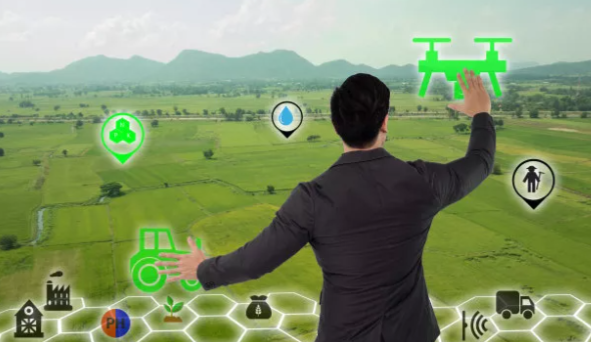
First of all, we need to clarify what is a “smart farm”: it is a kind of Internet of Things as the core foundation, through the materialization of various functional parts in the farm, combined with wireless technology, automatic control technology and database to achieve intelligent management farm.
The development of smart farms is mainly divided into three stages:
Step 1: Traditional labor or manpower liberation, no need to enter the farm, only manpower is required for remote control on the console;
Step 2: The farm is controlled by the host computer system, and the manager can directly control the host computer to complete all farm operations, and the host computer issues all control instructions;
Step 3: Artificial intelligence is highly intelligent, and all operations do not need personnel to make decisions, and are all scheduled by unmanned systems.
In general, the cloud platform can be regarded as the brain of the smart farm, which is used for information collection, information storage, information processing, event triggering, task and instruction scheduling, etc. We take it as the manager’s role in the smart farm project, and complete the implementation of the smart farm project through the following steps:
1. Device access
Where environmental data collection is required, complete the installation and access of relay equipment. The relay device is used to connect the sensor and the intelligent management system to realize the transmission of data and control instructions. (For the relay device access process, please refer to the device access and configuration tutorial)
2. Collect data and report
Install the required sensors (such as temperature, humidity, and air quality detection) at the designated location, and connect them to the relay device. The relay device starts data collection and reporting according to the configuration parameters in the smart management system.
3. Process scheduling (data processing in the workflow engine)
After the data IO service of the smart management system receives the data, it will be delivered to the data processing process for processing. Such as: data operation, data storage, event triggering, etc.
a) Alarm (send alarm notification)
When the data of the data point meets the user’s preset value of the alarm trigger for the data point, the trigger node in the process will trigger the alarm event, and call the processing rules for the event to complete the subsequent actions, and send an alarm notification to the designated contact people and so on. последовательный модуль
b) Linkage (send commands to the device)
When the data of the data point meets the user’s preset value of the linkage trigger for the data point, the trigger node in the process will trigger the linkage event, and call the processing rule for the event to complete the subsequent behavior, and issue the linkage instruction to the specified equipment, etc. In this scheme, the linkage function is mainly used to issue the start, stop and adjustment commands of the fresh air system to the control system of the fresh air system, so as to realize the linkage reaction after the environmental state changes.