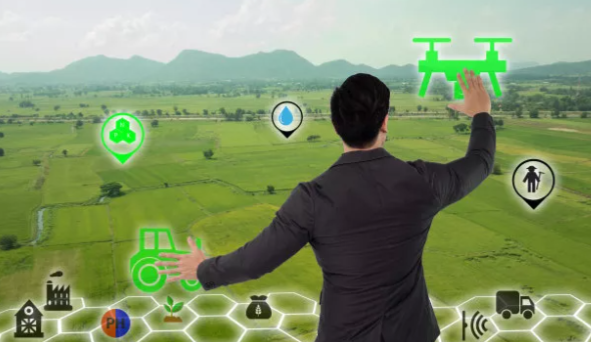
With the popularization of IoT technology, various IoT application cases can be seen everywhere in our lives unconsciously. Such as shared bicycles neatly parked on the roadside, shared mopeds, smart sockets and smart appliances in the home; smart irrigation systems in agriculture; smart parking systems in cities are all classic cases of IoT applications. It is foreseeable that the emergence and implementation of a large number of high-quality IoT solutions in the near future will bring a better experience and more convenience to our lives. Модуль Bluetooth
First of all, we need to clarify what is a “smart farm”: it is a kind of Internet of Things as the core foundation, through the materialization of various functional parts in the farm, combined with wireless technology, automatic control technology and database to achieve intelligent management farm.
The development of smart farms is mainly divided into three stages:
Step 1: Traditional labor or manpower liberation, no need to enter the farm, only manpower is required for remote control on the console;
Step 2: The farm is controlled by the host computer system, and the manager can directly control the host computer to complete all farm operations, and the host computer issues all control instructions;
Step 3: Artificial intelligence is highly intelligent, and all operations do not need personnel to make decisions, and are all scheduled by unmanned systems.
In general, the cloud platform can be regarded as the brain of the smart farm, which is used for information collection, information storage, information processing, event triggering, task and instruction scheduling, etc. We take it as the manager’s role in the smart farm project, and complete the implementation of the smart farm project through the following steps:
1. Device access
Where environmental data collection is required, complete the installation and access of relay equipment. The relay device is used to connect the sensor and the intelligent management system to realize the transmission of data and control instructions. (For the relay device access process, please refer to the device access and configuration tutorial)
2. Collect data and report
Install the required sensors (such as temperature, humidity, and air quality detection) at the designated location, and connect them to the relay device. The relay device starts data collection and reporting according to the configuration parameters in the smart management system.
3. Process scheduling (data processing in the workflow engine)
After the data IO service of the smart management system receives the data, it will be delivered to the data processing process for processing. Such as: data operation, data storage, event triggering, etc.
a) Alarm (send alarm notification)
When the data of the data point meets the user’s preset value of the alarm trigger for the data point, the trigger node in the process will trigger the alarm event, and call the processing rules for the event to complete the subsequent actions, and send an alarm notification to the designated contact people and so on. последовательный модуль
b) Linkage (send commands to the device)
When the data of the data point meets the user’s preset value of the linkage trigger for the data point, the trigger node in the process will trigger the linkage event, and call the processing rule for the event to complete the subsequent behavior, and issue the linkage instruction to the specified equipment, etc. In this scheme, the linkage function is mainly used to issue the start, stop and adjustment commands of the fresh air system to the control system of the fresh air system, so as to realize the linkage reaction after the environmental state changes.
Author: uartmodule
Understand GPRS Communication in One Article
About GPRS communication
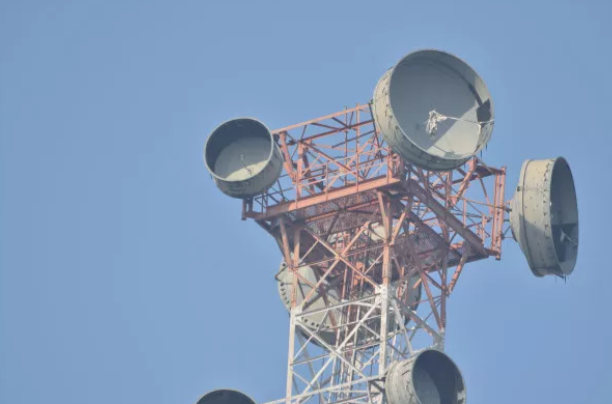
GPRS is the abbreviation of General Packet Radio Service. It breaks through the way of thinking that the GSM network can only provide circuit switching, and realizes packet switching by adding corresponding functional entities and partially transforming the existing information base station system. , the investment in this transformation is relatively small, but the user feedback data rate is very impressive. GPRS (General Packet Radio Service) is a data transmission technology based on the Global System for Mobile Phones (GSM), which can be said to be the continuation of GSM. GPRS is not different from the previous continuous channel transmission method. GPRS transmits in a packet (Packet) format, so the cost borne by the user is calculated in the unit of transmission data, not the entire channel used. Theoretically, It’s a bit cheaper than that. модбус Ethernet
The transmission rate of GPRS can generally be increased to 56bps or even 114Kbps. Because there is no longer a need to add a communication intermediary switch to existing wireless applications, both connection and transmission are more convenient and easier. Therefore, users can choose to surf the Internet online, participate in video conferences and other interactive communication, and users on the same video network (VRN), even without dial-up Internet access, and continue to maintain a connection to the network.
GPRS technology embodiment
Wireless packet-switching technology
GPRS general wireless packet service is a wireless packet switching technology based on the GSM system. Packet switching technology, also known as (data) packet switching technology, divides the data transmitted by users into a certain length. A part of a separate area is called a packet, a technique for transmitting information by transmitting packets. It is a kind of exchange technology that realizes the communication between computers and computers through computers and terminals. The quality of transmission routes is not high and the network technology means is relatively simple. There is a packet header (packet header) in front of each packet to indicate which destination address the packet is sent to, and then the switch forwards each packet to the destination according to the address mark of each packet. This process is called packet switching.
packet technology
The so-called packet means that data must undergo some specific processing in the communication system before it can be transmitted in the network. A specific communication protocol is used for data transmission. This process is like packaging and dispatching packages according to classification, which is called packaging.
GPRS transparent transmission module
E840-TTL-GPRS03 is a GPRS transparent transmission module launched by Ebyte. The software has complete functions and covers most of the conventional application scenarios. With simple settings, two-way data transparent transmission from the serial port to the network server can be realized. The module uses 2.0mm pin headers to facilitate the integration of user equipment and uses a wide voltage of 5V to 20V for power supply. It supports mobile and China Unicom 2G cards. конвертировать ethernet в wi-fi The communication and LED indication use compatible levels. The default 3.3V can be applied to the 5V level. It has the anti-interference ability and can be used in some environments with strong electromagnetic interference, such as in some power industries.
Electric car safety, do you still dare to buy an electric car?
“Compared with the mature technology of fuel vehicles, electric vehicles still need to improve a lot.”
Now is the golden window period for electric vehicles. With rising fuel prices and the development of intelligent driving technology, more and more users are buying electric vehicles, and the number of electric vehicles is increasing year by year. Vehicles are powered by electric energy, and safety has increasingly become a pain point for users. конвертировать ethernet в wi-fi
Because of the car accident of star Lin Zhiying, not only Tesla, but the safety of electric vehicles has re-entered the public’s field of vision, and people are again skeptical about the safety of electric vehicles. Racers and all-around champions with fast enough reflexes will have car accidents, not to mention ordinary drivers?
Intelligent driving
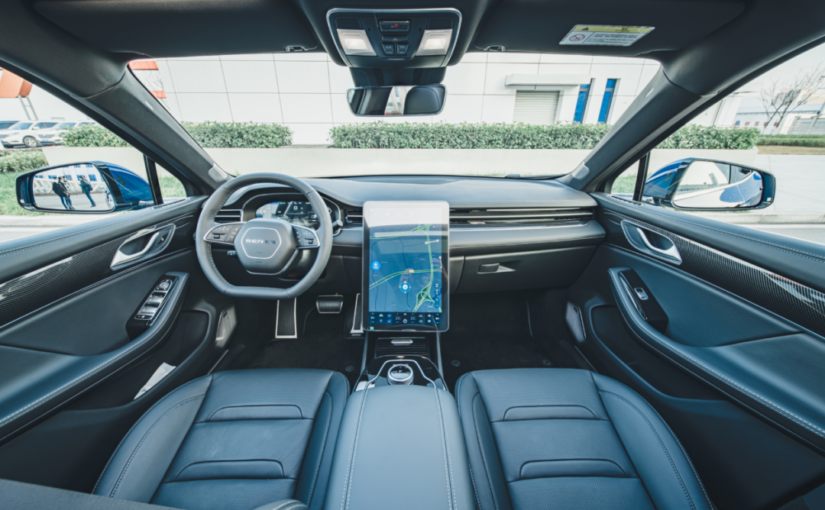
The smart cockpit of an electric vehicle provides the driver with more information interaction functions, which increase the richness and convenience of use and improve the driving experience. But at the same time, too many interactive functions will distract the driver’s attention and energy and interfere with driving.
Even if car manufacturers have designed many solutions to solve these problems, such as voice control, head-up display, etc., these product technologies have not reached sufficient maturity. On the contrary, products with immature technology may also have problems such as inaccurate speech recognition, insensitive operation, visual interference, complex central control operations, network delays, and black screen of the car and machine, which are more likely to interfere with driving.
Smart Electric Vehicle IoT Application
Taking Autopilot as an example, the current state of autonomous driving technology is still immature.
1. Wireless sensor sensing failure
For example, Tesla, Tesla’s autonomous driving perception unit mainly uses multi-camera visual perception technology, assisted by a single long-range 77GHz millimeter-wave radar fusion solution. Tesla has already encountered many obstacles, and the vehicle has not taken any deceleration or steering avoidance actions and has directly hit the obstacle. Most of the hit objects are white and static, which is more likely to cause Tesla’s automatic driving visual perception failure.
2. The intelligent algorithm is immature
In order to master more road features, simulate human driving style, and achieve a reliable level of autonomous driving, neural networks need to be trained and tested on representative datasets (driving behavior, complex environments, etc.) Advanced simulation software and user experience are combined to achieve multi-attribute balance and continuously optimize the autonomous driving model. Therefore, the automatic driving model is gradually optimized and mature, and before it matures and perfects, the initial users are equivalent to the experimenters to a certain extent.
Many functions of intelligent driving of electric vehicles are new to ordinary drivers, and the experience is very unfamiliar, which will lead to wrong driving cognition, wrong operation response, and it is difficult to perceive some potential safety hazards. Intelligent driving requires drivers to experience and adapt gradually. модбус Ethernet
Power Battery
There has been much news of electric vehicle battery fires in recent years, and battery safety has always been the biggest concern for consumers when buying electric vehicles. Electric safety is more important than intelligent driving.
The main safety problems of batteries at this stage are as follows:
1. The battery has occasional quality problems;
2. The consistency of the cells is not good, and there is liquid leakage and short circuit;
3. The wiring harness in the module is improperly laid out, and the insulation layer is worn and short-circuited due to extrusion and other reasons;
4. The poor production consistency of the electrical components of the battery pack leads to local overheating, etc.
These conditions may lead to thermal runaway of the power battery, causing the electric vehicle to catch fire.
In response to the above-mentioned hidden dangers of batteries, various battery manufacturers and automobile manufacturers are committed to the pursuit of battery product safety, and conduct research and development and testing higher than national standards; real-time monitoring of battery voltage and battery temperature, battery management system BMS power-off protection, release Battery voltage, called the thermal management system to cool the battery, etc. are all effective means to prevent “thermal runaway”.
Introduction to Lora Network Structure
LoRa is a spread spectrum modulation technology developed from chirp spread spectrum technology. It is a long-range, low-power wireless platform that has become the wireless transmission technology for the global IoT network.
What Is LoRaWAN? It is a Low Power Wide Area Network standard based on the open source MAC layer protocol launched by the LoRa Alliance. This technology can provide a local, national, or even global network for battery-operated wireless devices. Модуль удаленного ввода-вывода
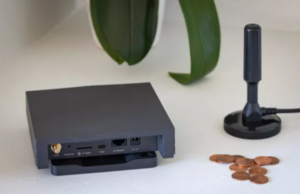
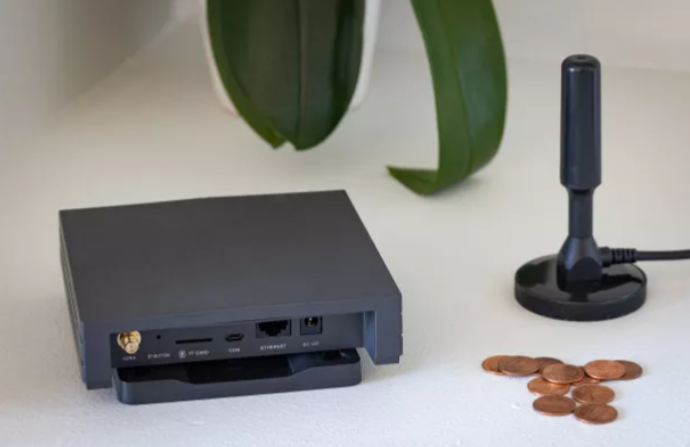
The network entity of LoRaWAN is divided into four parts: End Nodes, Gateways, LoRaWAN Servers, and Customer Servers.
End Node: End nodes are generally all kinds of sensors for data collection, switch control, etc.
Gateway: LoRa gateway encapsulates and forwards the collected node data.
Network Server: Mainly responsible for the integrity check of upstream and downstream data packets.
Application Server: Mainly responsible for network activation of OTAA devices and encryption and decryption of application data.
Customer Server: Receive data from the node from the AS, perform business logic processing, and send data to the node through the API interface provided by the AS.
When LoRa devices are used in practice, some have to keep the network connection unobstructed because the transmission distance is not enough to ensure that data is sent and received normally. At this time, there is a way of relay networking to solve the problem of insufficient communication distance.
Relay networking can be understood as a bridging method. Configure a device in the middle as a relay mode, and the previously too far distance is split into two parts to achieve a perfect data transmission bridge function.
Let’s continue to learn the LoRa Protocol Layer: Application, MAC, and Modulation. Application is the application layer, user-defined applications, and software interfaces based on LoRaWAN technology. The common LoRaWAN protocol is the LoRaMAC protocol, and the terminal types defined by the protocol are Class A, Class B, and Class C.
1. Class A
Class A is the two-way (duplex) communication terminal equipment. Terminal equipment allows two-way communication, which can be understood as full-duplex communication. Each terminal device’s uplink transmission is accompanied by two downlink receive windows. The transmission channel of the terminal device is based on its own communication requirements, and the fine-tuning is based on a random time reference (ALOHA protocol). The terminal device of Class A has the lowest power consumption during application.
2. Class B
Class B is the two-way communication terminal equipment with preset receiving channels. This type of device will open the remaining receiving window in the preset time. In order to achieve this purpose, the terminal device will receive a Beacon from the gateway synchronously, and synchronize the time of the base station and the module through the Beacon. In this way, it is clear to make the server know the end device is receiving data.
3. Class C
Class C is the two-way communication terminal equipment with maximum receive channel. This terminal equipment continuously opens the receive window and closes only when transmitting. Ethernet ввод-вывод